
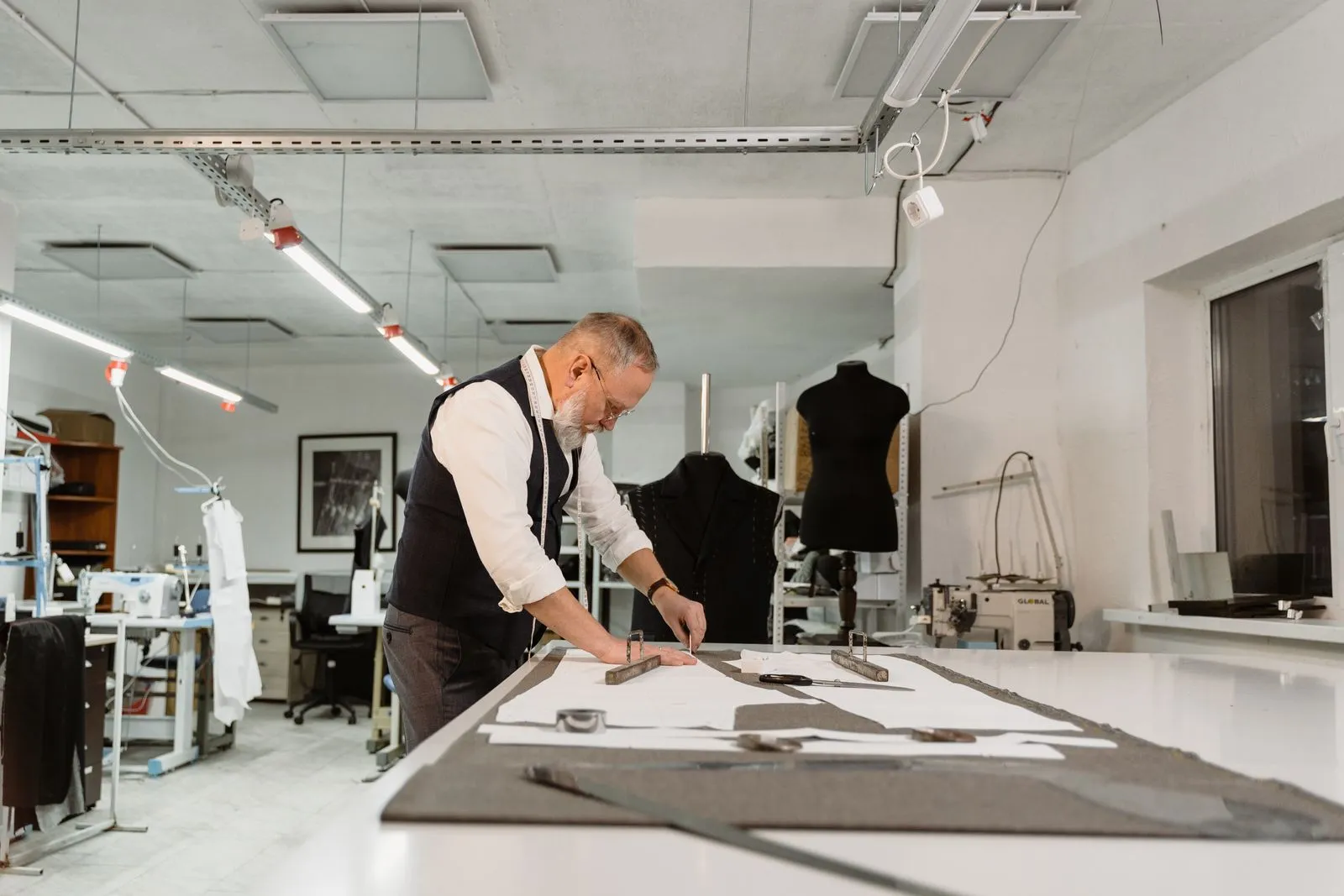
Clothing that fits well while standing may feel restrictive, bunch up, or expose skin when worn in a wheelchair. Seated posture changes how fabric falls across the waist, hips, knees, and back, while belts, seams, and fasteners can press against the body. A tailor can assess garments in the position you wear them and discuss adjustments that support comfort and access. The right changes depend on your posture, mobility, preferences, and the clothing itself.
Fit Starts In A Seated Position
Try on garments in your usual seated position, with the chair setup and cushions you use every day. Notice where fabric pulls, folds, or presses: the waistband, lower back, hips, thighs, knees, and ankles are common areas to check. A trusted helper can note issues you may not see, but your comfort and preferences should guide the fitting.
Clothing may need different proportions when you are seated. Pants can pull down at the back or gather at the front, while long tops may bunch beneath the hips. A tailor can assess the garment while you sit, reach, and move your arms, then make adjustments with those movements in mind. Ask to test the altered garment in the same position before approving the final fit.
Reduce Pressure And Bunching
Waistbands, bulky seams, pockets, and closures can create pressure where the body meets the chair. Depending on the garment, a tailor may be able to soften or reposition a waistband, remove a back pocket, flatten a seam, or shift a closure away from a pressure-prone area. Explain where you feel rubbing or discomfort and whether you use a cushion or support that affects the fit.
Pant length and fabric volume also matter. Excess fabric can bunch behind the knees or catch near footrests; a shorter hem or tapered leg may help, provided it does not restrict movement or circulation. Avoid making a garment so tight that it limits comfortable sitting or transfers. Ask the tailor to preserve enough ease for your usual range of motion.
Make Dressing And Access Easier
Closures can be difficult to reach or operate from a seated position. A tailor may be able to replace small buttons with larger ones, add a zipper pull, move a fastener, or convert a closure to a simpler option. The best choice depends on hand strength, reach, sensation, and whether you dress independently or with assistance. Try the proposed closure before committing to a full alteration.
Other practical changes may include opening a side seam for easier dressing, adjusting sleeves for seated arm position, or shortening a top to reduce fabric beneath the hips. Some changes work better on certain fabrics or garment designs, so ask what can be altered without weakening the garment. Bring the clothing you wear most often and describe the specific task you want to make easier.
Plan A Useful Fitting
Before an appointment, make a short list of what feels uncomfortable and what you want the garment to do. Note whether the issue happens during sitting, transfers, reaching, or a full day of wear. Bring any usual supports or accessories that affect fit, and wear the type of underlayers you normally choose. Clear examples help the tailor focus on changes that address your everyday needs.
Ask which alterations are reversible, how they may affect the garment’s appearance, and whether the fabric can handle the planned work. If comfort concerns involve persistent pain, skin irritation, or pressure injury risk, consult an appropriate health professional as well as a tailor. Clothing adjustments can improve fit, but they do not replace clinical guidance about skin protection or positioning.
A comfortable wheelchair-friendly fit comes from checking clothing while seated and targeting the specific points that pull, press, bunch, or make dressing harder. Bring a well-used garment to a fitting and explain how you move and what you need it to do. Albany Adaptive Tailoring can discuss alteration options for your clothing and comfort goals.